
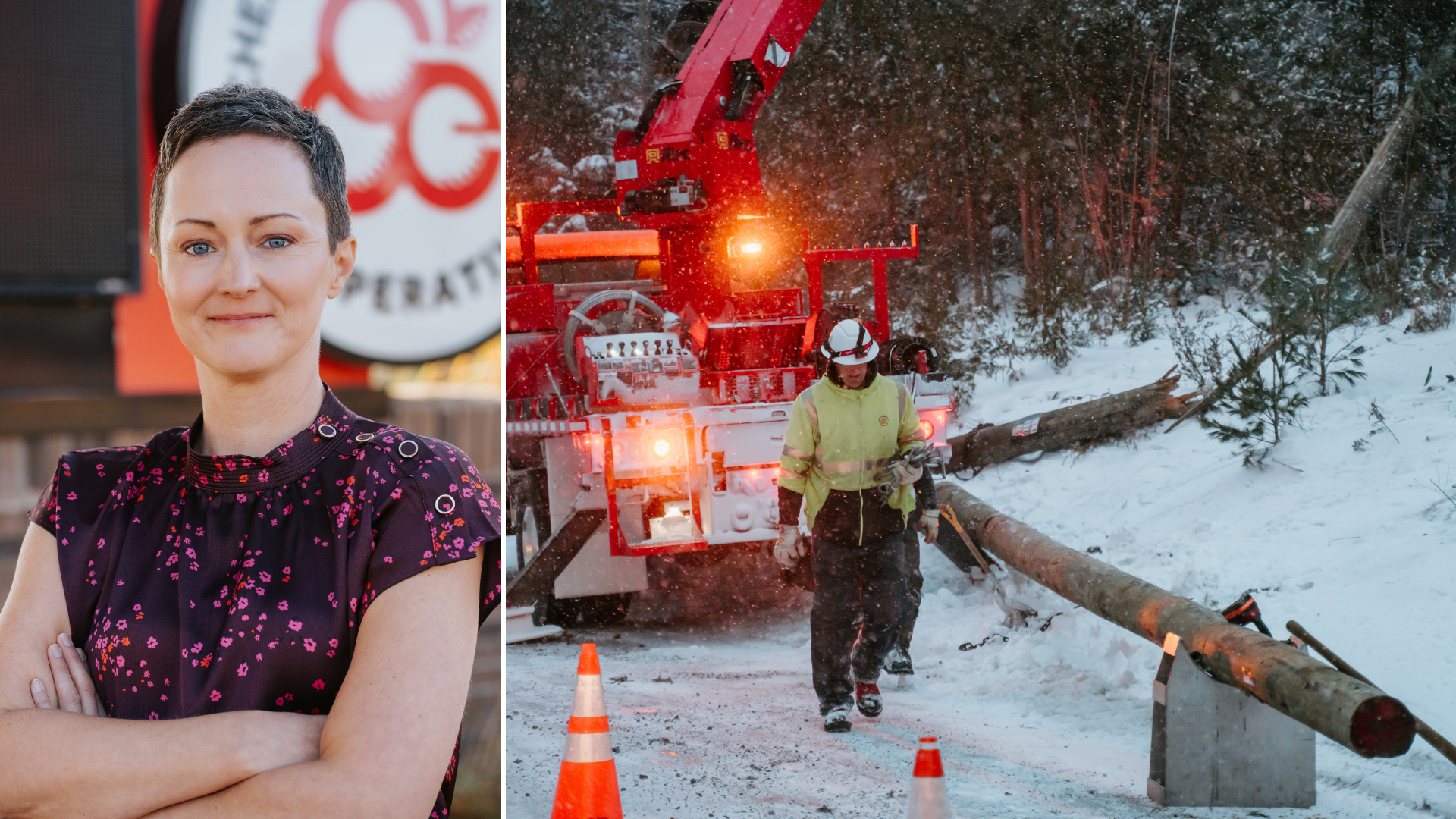
A year ago, a devastating ice storm tore through northern Michigan.
It coated trees in ice like glass. Snapped poles like toothpicks. Left entire communities in the dark for weeks. The scale was staggering. Even for those of us who didn’t take a direct hit, the message was unmistakable: When a storm gets big enough, we all feel it.
Storms like this are why the Federal Emergency Management Agency (FEMA) exists.
FEMA is the nation’s backstop for disasters that exceed local and state capacity. It’s there when the damage is too widespread, too expensive, or too complex for communities to shoulder alone.
And while Cherryland wasn’t in the bullseye of last year’s ice storm, FEMA absolutely matters to us because one day, the storm will be ours.
When a major storm hits our system, the costs add up fast. Crews work around the clock. Equipment is destroyed. Temporary repairs turn into permanent rebuilds. Unlike investor-owned utilities, we don’t have shareholders to absorb those costs. We’re a not-for-profit cooperative, which means 100% of what it costs to restore power is ultimately paid by our member-consumers.
That’s where FEMA reimbursement comes in. It helps ensure that restoring power quickly and safely doesn’t translate into years of higher electric bills for our members. But today, the system isn’t working the way it should. Right now, FEMA’s disaster reimbursement process is slow, inconsistent, and unpredictable. Cooperatives can end up waiting years to be reimbursed, and eligible costs can be denied long after the work is done.
For electric cooperatives, that uncertainty matters. We don’t have excess cash sitting on the sidelines. When reimbursement is delayed or denied, those costs don’t disappear; they land squarely on our members’ shoulders through rates, deferred projects, or reduced investment in future resilience.
Our national association, along with electric cooperatives across the country, are advocating for commonsense FEMA reform. Not to expand FEMA’s role. Not to lower standards. But to make the program function as it was intended.
The changes we’re supporting in the bipartisan FEMA Act of 2025 are straightforward: faster reimbursement, clearer approval processes, better access to resiliency funding, and recognition of the financing costs utilities carry while waiting on FEMA decisions.
It really is that simple. Our members deserve clearer rules, faster decisions, and consistent treatment across disasters.
We invest every day to keep the lights on. We plan for storms we haven’t seen yet. And we do it with one goal in mind: protecting our members from both outages and unnecessary costs.
The ice storm of 2025 reminds us of what’s possible when nature is at its worst. FEMA reform is about making sure that when the next big storm comes—here or anywhere—we have the tools we need to rebuild.
Because resilience isn’t just about poles and wires. It’s about systems that work when we need them most.

Rachel,
Thank you for that FEMA update.
Is this legislation in response to mismanagement by the current presidential administration?
Hi Nick – No, these reforms have been needed for decades. They aren’t driven by any specific administration or party, I think that’s why the reform package has such widespread, bipartisan support. That said, the reform package couldn’t certainly still be derailed by partisan politics which would be a real shame.
Spot on as usual Rachel. From someone who’s dove deep into the proposed FEMA act, these reforms have been needed since Katrina (when I started my career), and bring back the focus of FEMA to recovery and mitigation. Long needed.