
Any parent in northern Michigan knows the rule: when your kids are young and growing fast, buy the winter coat a size up. Buy exactly what fits today, and there’s a decent chance they’ll outgrow it before the snow melts.
Ten years ago, your cooperative made essentially the same decision. Just with a power plant.
Cherryland gets its power through Wolverine Power Cooperative, which we own alongside other Michigan electric cooperatives. A decade ago, Wolverine needed about 200 megawatts of new generation to support reliability for its members and the northern Michigan electric grid.
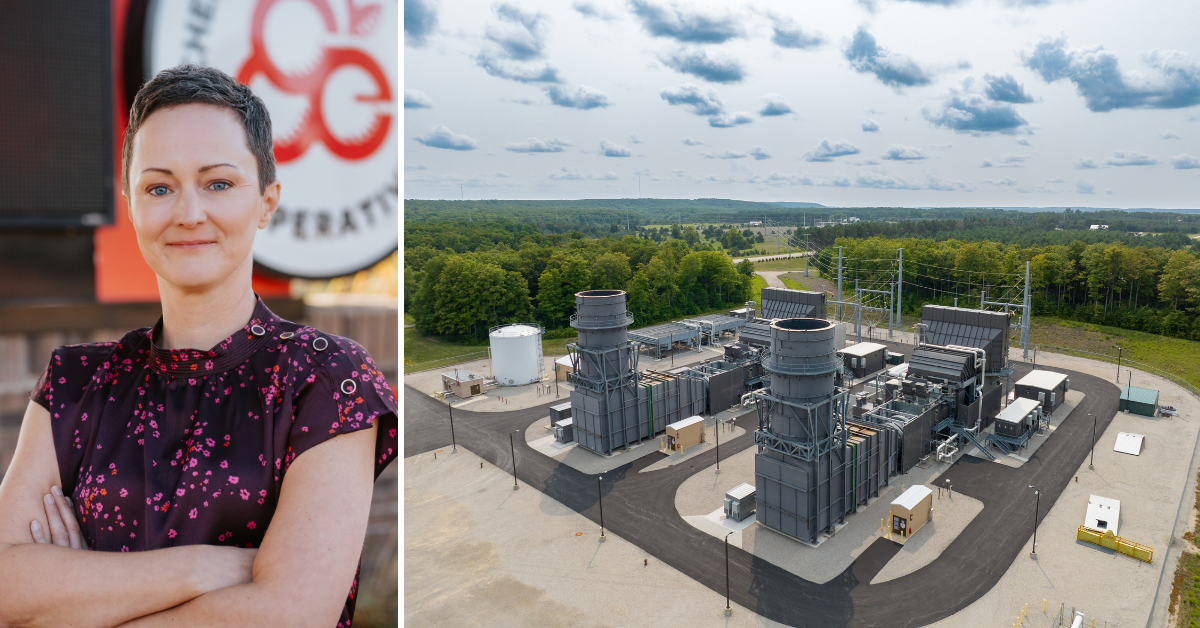
Instead, we built 432 megawatts.
The economics made sense. For roughly $40 million more, we could build twice the capacity we needed at the time; capacity we believed our members would eventually grow into. We did.
Alpine came online in June 2016 after just 18 months of construction. Today, a similar project would take at least seven years. Building that additional capacity today would cost an estimated $400 million—roughly ten times what it cost us then.
And today, most of that “extra” capacity isn’t extra anymore.
Wolverine’s membership and electric demand have grown. At the same time, the grid increasingly needs generation that can start quickly when electricity use spikes or other resources are not producing enough. Alpine was expected to run 30 to 45 days a year. Today, it runs 90 to 120.
That has made Alpine an important reliability resource for Michigan. And, it has also been remarkably valuable for members.
Over the past decade, Alpine has generated approximately $270 million in net revenue, far more than the initial cost of the plant.
Here is why that matters to you: when Alpine runs during periods of high power prices, the electricity it sells into the market generates revenue. That revenue is credited directly against the power costs Wolverine’s members pay each month. It goes directly to our power bill and immediately saves you money.
In other words, Alpine doesn’t just help keep the lights on when the grid is under stress. It helps offset the cost of keeping them on.
Ten years ago, there was no way to know exactly what the electric grid would look like in 2026. We simply knew it was our responsibility to build beyond what members needed in the moment and prepare for what might be needed next.
Sometimes buying the coat a size up costs a little more today.
Sometimes it saves you from shopping for one in the middle of a blizzard.

Leave A Comment